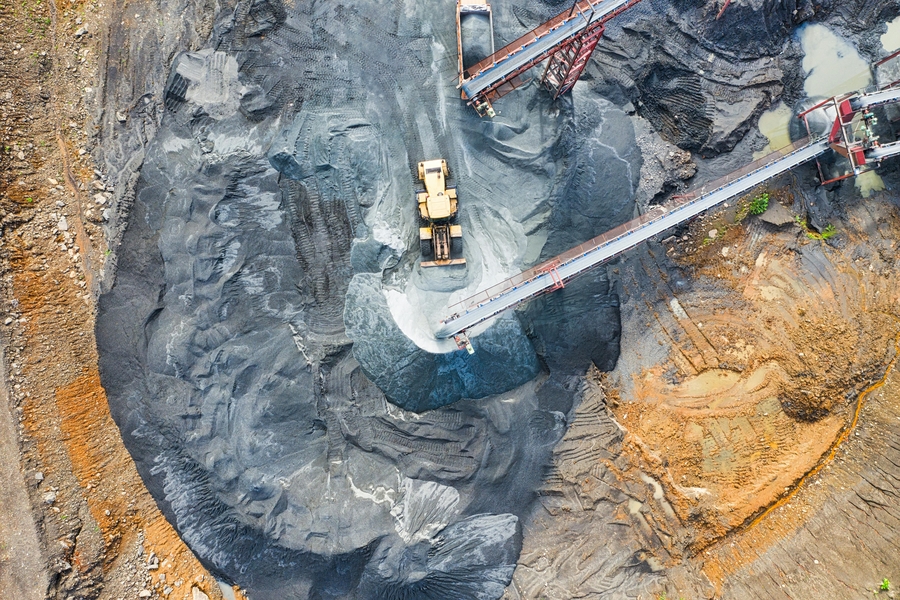

Indonesia has cemented its position as one of the world’s largest coal exporters, thanks to its abundant reserves and strategic location.
In 2023, Indonesia produced approximately 775.2 million metric tons of coal, making it the third-largest coal producer globally. The country is also the largest seaborne coal exporter, accounting for 38.3% of the global seaborne coal market in 2024, with exports reaching 494.6 million metric tons in 2023. Key export destinations include China, India, and Japan.
Indonesia’s coal reserves are substantial, with proven reserves of approximately 30.2 billion metric tons as of 2023. The largest reserves are located in East Kalimantan (11.59 billion metric tons) and South Sumatra (8.6 billion metric tons). The coal mining sector plays a significant role in Indonesia’s economy, contributing around 6.6% to the national GDP. In 2023, the GDP from coal and lignite mining was approximately 1.1 quadrillion rupiah (USD 67.8 billion).
Recent government initiatives aim to shift the focus from exporting raw coal to fostering downstream industries. This transformation is part of a broader strategy to add value to Indonesia’s natural resources while creating sustainable economic growth. Policies encouraging value-added processing present a wealth of opportunities for foreign investors seeking to participate in Indonesia’s evolving coal industry.
The downstream vision aligns with global trends, as markets increasingly demand advanced coal products such as methanol and Dimethyl Ether (DME), used in renewable energy and industrial applications. Indonesia’s commitment to this vision is backed by regulatory changes, ambitious investment targets, and government incentives.
Transforming the Coal Sector with Downstream Opportunities
The government’s downstream strategy is centered on reducing reliance on raw exports and supporting industries that process coal into higher-value products. Target industries include coal-to-methanol and coal-to-DME production, alongside other advanced applications such as chemicals for industrial use. These initiatives require substantial investment, both in terms of financial capital and technology, and highlight a pivotal role for foreign investors in accelerating this transition.
The Indonesian government has set ambitious targets for downstream coal industries, aiming to establish 10 coal-to-methanol and DME plants by 2030. These projects are part of a broader strategy to increase the added value of coal and reduce reliance on imported liquefied petroleum gas (LPG). Downstream industrialization efforts also include coal upgrading, gasification, and liquefaction to meet domestic energy needs and reduce petroleum gas (LPG) imports. Additionally, coal mining companies seeking to extend their contracts must establish a downstream industry ecosystem, ensuring compliance with Indonesia’s broader resource policies.
Incentives to Maximize Investment Returns
Indonesia offers a range of incentives to attract foreign investment in the coal industry:
- Tax Holiday:
- Duration: 5 to 20 years, depending on the scale of investment.
- Investments of IDR 500 billion or more qualify for a 100% reduction in corporate income tax (CIT) for 5 years, with extensions up to 20 years for larger investments.
- Post-Holiday: After the tax holiday, a reduced CIT rate of 50% is offered for an additional two years.
- Customs Duty Exemptions:
- Scope: Exemptions on import duties for machinery, equipment, and raw materials used in production.
- Eligibility: Available for businesses in Special Economic Zones (SEZs) and bonded zones.
- Corporate Income Tax Reductions:
- Tax Allowances: Up to 30% reduction of taxable income based on the amount invested in tangible fixed assets.
- Additional Benefits: Accelerated depreciation and reduced withholding tax on dividends paid to non-residents.
Showcasing Key Downstream Projects
Several high-profile projects are already underway:
- PT Bukit Asam and PT Pertamina Coal-to-DME Project:
- Location: Tanjung Enim, South Sumatra
- Capacity: 1.4 million tons of DME per year
- Funding: USD 2.1 billion
- Timeline: Groundbreaking in 2022, expected completion by 2025
- PT Bukit Asam Coal-to-Methanol Project:
- Location: Kalimantan
- Capacity: 300,000 tons of methanol per year
- Funding: USD 2 billion
- Timeline: Expected completion by 2026
Market Potential for Value-Added Coal Products
Indonesia’s coal industry is evolving rapidly, driven by shifts in global energy demand and the emergence of value-added markets. Traditional coal markets continue to offer stability, but emerging opportunities in domestic and regional markets for downstream products are gaining momentum.
For instance, Indonesia’s growing demand for methanol presents significant potential for investors. The country’s methanol market was approximately 1.35 million tons in 2023, with a projected growth rate of 3.2% annually until 2034. Domestic demand is driven by the chemical manufacturing sector, particularly for formaldehyde and acetic acid production.
Similarly, the regional market for DME, which serves as a substitute for Liquefied Petroleum Gas (LPG), is poised for growth. The demand for DME is expected to grow significantly, with the market projected to reach USD 100.9 million by 2032, at a CAGR of 4.91%.
Comparing the prices of raw coal to those of processed products reveals a stark difference in value, making downstream investments an attractive prospect. Export outlooks for value-added products also suggest increasing demand in Asia-Pacific markets, further solidifying Indonesia’s position as a key supplier of advanced coal derivatives.
Regulatory Framework Supporting Downstream Investments
Indonesia’s regulatory framework supports downstream development through a combination of mandates and incentives. Amendments to the Mining Law emphasize the need for permit holders to process coal domestically, creating a legal foundation for downstream industries. Companies must establish domestic processing facilities by 2025 to comply with the Mining Law amendments. Non-compliance can result in fines, suspension of mining licenses, or revocation of permits.
The government offers various incentives, including tax holidays, import duty exemptions on machinery, and reduced corporate income taxes for companies investing in processing facilities. However, the regulatory landscape also emphasizes environmental compliance. Stringent requirements for processing plants reflect Indonesia’s commitment to sustainable development, ensuring that environmental impacts are minimized.
- Emission Limits:
- Processing plants must adhere to specific emission limits for pollutants such as sulfur dioxide (SO₂), nitrogen oxides (NOₓ), and particulate matter (PM).
- Compliance Metrics: Continuous Emission Monitoring Systems (CEMS) are mandatory for certain industries, with data connected to the government’s monitoring system (SISPEK). Non-compliance can lead to penalties, including fines and operational restrictions.
Pathways to Investment Success in the Coal Sector
Unlocking Upstream-Downstream Synergies
Investors can tap into upstream opportunities by integrating mining operations with downstream facilities. This includes developing infrastructure to efficiently connect mines to processing plants, ensuring seamless supply chain operations.
Capturing Value in Downstream Processing
Downstream investments are at the heart of Indonesia’s coal industry transformation. Opportunities include coal-to-methanol projects, coal-to-DME plants, and facilities for producing other industrial chemicals. These investments not only offer higher profit margins but also align with Indonesia’s policy goals.
Building Essential Supporting Infrastructure
Supporting infrastructure is essential for downstream development. Investments in storage, transportation networks, port facilities for processed products, and utility supply for processing plants are critical components of this ecosystem. Foreign investors can collaborate with local stakeholders to bridge infrastructure gaps and ensure smooth project implementation.
Strategies for Overcoming Challenges
While the opportunities are abundant, investors must navigate significant challenges. High capital requirements for downstream projects necessitate innovative financing solutions, including joint ventures and public-private partnerships. Addressing infrastructure gaps requires collaboration with local governments and stakeholders. Ensuring compliance with environmental regulations is critical, with sustainable practices becoming a non-negotiable aspect of project planning.
Future Prospects for Indonesia’s Coal Industry
The future of Indonesia’s coal industry lies in its ability to adapt to global energy transitions. Downstream industries are expected to grow steadily, supported by evolving government policies and increasing demand for advanced coal products. Indonesia’s strategic shift not only secures its position as a global leader in the coal market but also opens new avenues for foreign investors seeking high-growth opportunities.
Partner with MAP Resources Indonesia for Your Investment Needs
Navigating Indonesia’s coal industry requires expert guidance and strategic planning. At MAP Resources Indonesia, our consultants specialize in providing tailored solutions for foreign investors. Contact us today at info@mapresourcesindonesia.com.