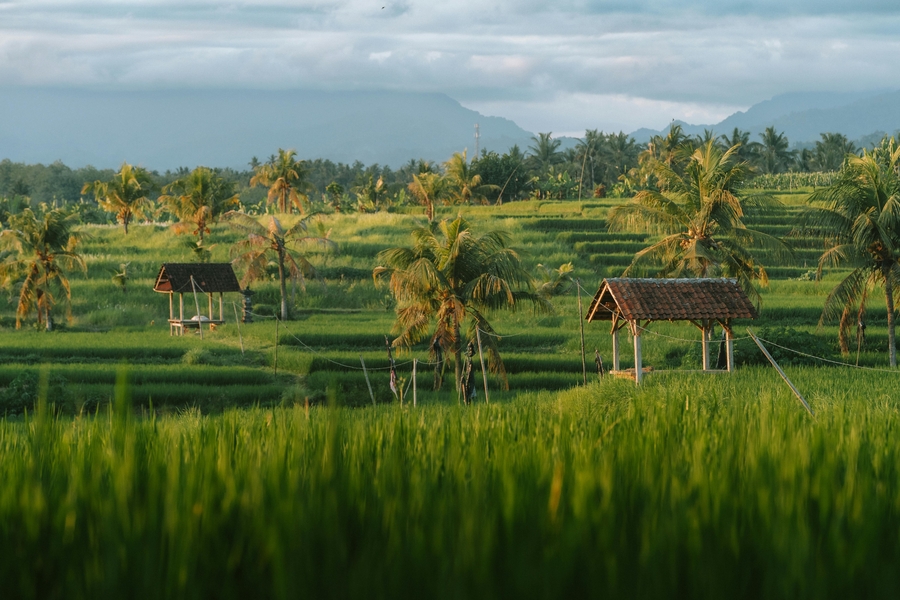

Indonesia’s vast and diverse agricultural landscape presents significant opportunities for foreign investors. As a major global supplier of commodities like palm oil, coffee, cocoa, and spices, the country plays a pivotal role in international food security.
The gross production value in Indonesia’s agriculture market is projected to be USD 46.42 billion in 2025, with an expected annual decline of -2.90% from 2025 to 2029. Despite this, several subsectors such as palm oil, coffee, cocoa, and fisheries are experiencing steady growth, making them prime investment targets. Agriculture contributed approximately 12% to Indonesia’s GDP in 2024, slightly lower than in previous years, where it consistently stood at around 13%.
Agriculture remains the largest employer in Indonesia, with 29% of the total workforce engaged in the sector as of 2024. The fisheries sector has been particularly strong, growing at a 4.1% annual rate, followed by palm oil (3.5%), coffee (2.8%), and cocoa (2.2%).
Recent government initiatives, such as relaxed foreign ownership rules, incentives for sustainable farming, and increased investment in agritech, are making the sector more accessible and profitable for international investors. With the rising global demand for organic and processed agricultural products, Indonesia offers both large-scale agribusiness opportunities and niche markets for specialty crops.
Understanding the Agricultural Landscape
Indonesia’s agricultural sector is diverse, spanning plantation crops, food staples, and high-value exports. The country is one of the world’s largest producers of palm oil, rubber, coffee, and fisheries while also being a key exporter of spices such as nutmeg and cloves.
Key Agricultural Products and Export Potential
- Palm oil: Indonesia is the largest producer and exporter of palm oil globally, exporting around 25 million metric tons in 2024.
- Coffee and cocoa: Premium Arabica and robusta coffee, along with cocoa, are key export commodities.
- Spices and specialty crops: Nutmeg, vanilla, cloves, and cinnamon are highly sought after in global markets.
- Seafood and aquaculture: Indonesia’s extensive coastline makes it a hub for fisheries and seafood exports.
Total Agricultural Exports and Trade Agreements
Indonesia’s total agricultural exports were valued at approximately USD 241.25 billion in 2024, reflecting a growth rate of 2.06% compared to the previous year.
Main Export Destinations and Import Demand
- China: The largest importer of Indonesian agricultural products, with strong demand for palm oil, rubber, and coffee.
- European Union (EU): A key market for palm oil and cocoa, driven by industrial use and consumer demand.
- United States (USA): A major importer of coffee, cocoa, and seafood.
- India: One of the biggest buyers of Indonesian palm oil and spices.
Indonesia’s participation in trade agreements such as RCEP (Regional Comprehensive Economic Partnership) and ASEAN Free Trade Agreements enhances market access for agricultural exports, reducing tariffs and facilitating smoother trade relations.
Despite its strengths, the sector faces challenges such as land fragmentation, outdated farming techniques, and infrastructure gaps. However, these issues present lucrative investment opportunities for foreign firms willing to introduce modern agritech solutions, sustainable farming practices, and advanced logistics networks.
A Favorable Investment Climate for Foreign Agribusinesses
Indonesia has introduced progressive reforms to attract foreign investment into agriculture. Investors benefit from tax incentives, special economic zones (SEZs), and improved ease of doing business through streamlined licensing processes.
Land Acquisition and Foreign Ownership Flexibility
Foreign investors cannot directly own land in Indonesia but have several legal avenues to operate in the sector:
- Long-term land leases through Hak Guna Usaha (HGU) titles.
- Joint ventures with local partners for plantation and processing investments.
- Partnerships with local cooperatives to navigate legal complexities.
Tax Incentives and SEZ Benefits
- Tax holidays:
- Up to 20 years for investments of at least IDR 1 trillion (USD 70 million).
- 15 years for investments of at least IDR 500 billion (USD 35 million).
- 10 years for investments of at least IDR 100 billion (USD 7 million).
- VAT and Luxury Goods Tax Exemptions: Exemptions on deliveries of taxable goods and services within SEZs.
- Customs and Excise Exemptions: Exemptions on import duties for capital and consumption goods.
- Tax Allowances: These are additional deductions for certain expenses, such as research and development.
Non-Fiscal Incentives in SEZs
- 100% Foreign Ownership: Allowed in specific industries within SEZs.
- Ease of Access to Permits: Streamlined processes for obtaining necessary permits and licenses.
- Building Use Rights: Up to 80 years.
Indonesia’s government is also actively supporting the export of agricultural products, offering reduced export duties and special incentives for businesses engaging in value-added processing and packaging.
Key Investment Areas with High Growth Potential
Foreign investors have multiple entry points into Indonesia’s agribusiness sector, particularly in high-growth and underdeveloped areas.
Sustainable Palm Oil and Processing
Sustainability certification programs are gaining traction as global markets demand responsibly sourced palm oil. Investing in processing facilities and sustainability initiatives can position foreign businesses favorably within the supply chain.
Organic Farming and Specialty Crops
Global demand for organic and non-GMO produce is growing, with premium-priced markets for organic coffee, vanilla, and exotic fruits. Foreign investors can capitalize on this demand by introducing certified organic farms and export-oriented processing hubs.
Agricultural Technology and Smart Farming
Indonesia’s smallholder-dominated farming sector is primed for technological disruption. Investment opportunities include:
- Precision agriculture and IoT-based farming solutions.
- AI-driven supply chain management to optimize yields and reduce waste.
- Blockchain technology for traceability and certification in export markets.
Cold Chain Logistics and Storage Infrastructure
Agricultural supply chains in Indonesia suffer from high post-harvest losses due to inadequate storage and distribution networks. Investment in cold storage, refrigerated transport, and warehouse infrastructure can unlock significant growth potential in perishable exports such as seafood, dairy, and fresh produce.
Processing and Value-Added Manufacturing
Rather than exporting raw materials, Indonesia is encouraging value-added processing. Foreign investors can benefit from:
- Coffee roasting and premium packaging for export to international markets.
- Cocoa processing facilities to meet the growing demand for Indonesian chocolate.
- Spice extraction and essential oil manufacturing, capitalizing on Indonesia’s rich biodiversity.
Partner with MAP Resources Indonesia to Unlock Agricultural Investment Opportunities
At MAP Resources Indonesia, we specialize in helping foreign investors identify profitable opportunities, manage legal compliance, and secure the right partnerships.
Contact us today at info@mapresourcesindonesia.com to explore your next agribusiness investment in Indonesia!